

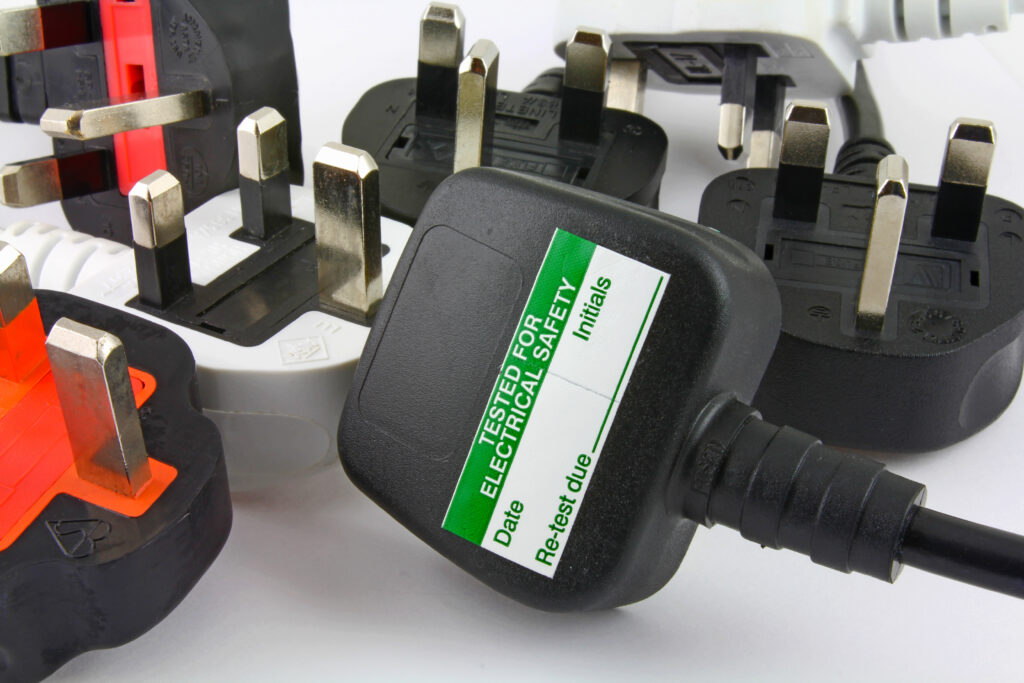
If you’re responsible for electrical safety in the workplace, Portable Appliance Testing (PAT) plays a key role in keeping people safe and businesses compliant. But one of the most common questions we get at KJ Electrical is: how often should appliances be PAT tested? The answer isn’t always straightforward — but it is important.
PAT testing is a safety measure designed to ensure that electrical appliances remain safe to use over time. While visual inspections can catch obvious signs of damage, some electrical faults are only picked up through testing. PAT helps to reduce the risk of electric shocks, fires, and accidents caused by faulty appliances — especially in busy environments where equipment is used regularly or by multiple people.
Although there’s no legal requirement to PAT test every item annually, employers and duty holders do have a responsibility under UK health and safety legislation (such as the Electricity at Work Regulations 1989) to maintain electrical systems and equipment in a safe condition. PAT testing is one way of demonstrating that you’re doing that.
Rather than applying a blanket testing schedule, a risk-based approach is best. That means assessing the likelihood of an appliance developing a fault — and the potential impact if it did. Things to consider include:
Type of appliance – e.g. Class I (earthed), Class II (double insulated), IT equipment, handheld tools
Where it’s used – Is it a low-risk environment like an office, or higher risk like a workshop or kitchen?
Who uses it – Trained staff, the general public, or vulnerable users
Frequency of use – Is it used occasionally or daily?
Equipment history – Has it been repaired, damaged, or moved frequently?
For example, an electric drill on a construction site used daily by different contractors should be tested far more often than a desktop printer used in an office once or twice a week.
Environment | Equipment | Suggested Frequency |
Office | Computer, Monitors | Every 2–4 years |
Office | Kettles, extension leads | Annually |
Workshops / Garages | Handheld power tools | Every 3-6 months |
Schools | Portable classroom equipment | Annually |
Rental / Hire | All equipment for hire | Before every hire |
Retail | Lighting, POS extension leads | Every 1-2 years |
These are only guidelines — your own intervals should be based on an individual risk assessment.
Failing to test equipment frequently enough can result in appliances becoming dangerous without anyone noticing. Over time, wear and tear can lead to damaged plugs, loose wires, or internal faults — all of which pose serious risks, including electric shock, burns, fires, or loss of data.
If an incident does occur and no testing records exist, it could be difficult to demonstrate that reasonable safety measures were in place — which could lead to legal, insurance, or reputational consequences.
It’s also good practice to maintain a clear audit trail of testing and inspections, so you can show your due diligence. Review your PAT testing schedule regularly — especially if circumstances change, such as:
Buying new or second-hand equipment
Reorganising workspaces or changing usage patterns
After any repairs or reported issues
At KJ Electrical, we offer professional, reliable PAT testing services across Essex and surrounding areas. Whether you need a one-off assessment or a regular testing schedule, we’ll help you identify what needs testing and when — all in line with current UK guidance.
We’ll provide full documentation, labelling, and peace of mind that your appliances are safe to use. Let us take care of your PAT testing so you can focus on running your business, confidently and compliantly.
Get in touch today to book your PAT testing or to discuss a tailored maintenance plan with our qualified team.